- Why Digital Marketing Tools Are Essential for Business Growth
- Top Must-Have Digital Marketing Tools for Every Business
- 1. Social Media Management Tools
- 2. Email Marketing Solutions
- 3. SEO Optimization Tools
- 4. Content Creation and Design Tools
- 5. Analytics and Reporting Tools
- 6. Customer Relationship Management (CRM)
- How to Choose the Right Digital Marketing Tools for Your Business
- Conclusion
Digital Marketing Tools: Top Must-Have and Affordable Solutions
In today’s fast-paced online landscape, digital marketing tools have become essential for businesses of all sizes. Whether you’re a solo entrepreneur, a small startup, or a well-established company, the right tools can streamline your marketing efforts, enhance your campaigns, and ultimately boost your ROI. Yet, with hundreds of options available, finding affordable solutions that do not compromise on quality can be daunting. This article explores some of the top must-have digital marketing tools that are budget-friendly and efficient, ensuring your marketing strategy hits the mark without breaking the bank.
Why Digital Marketing Tools Are Essential for Business Growth
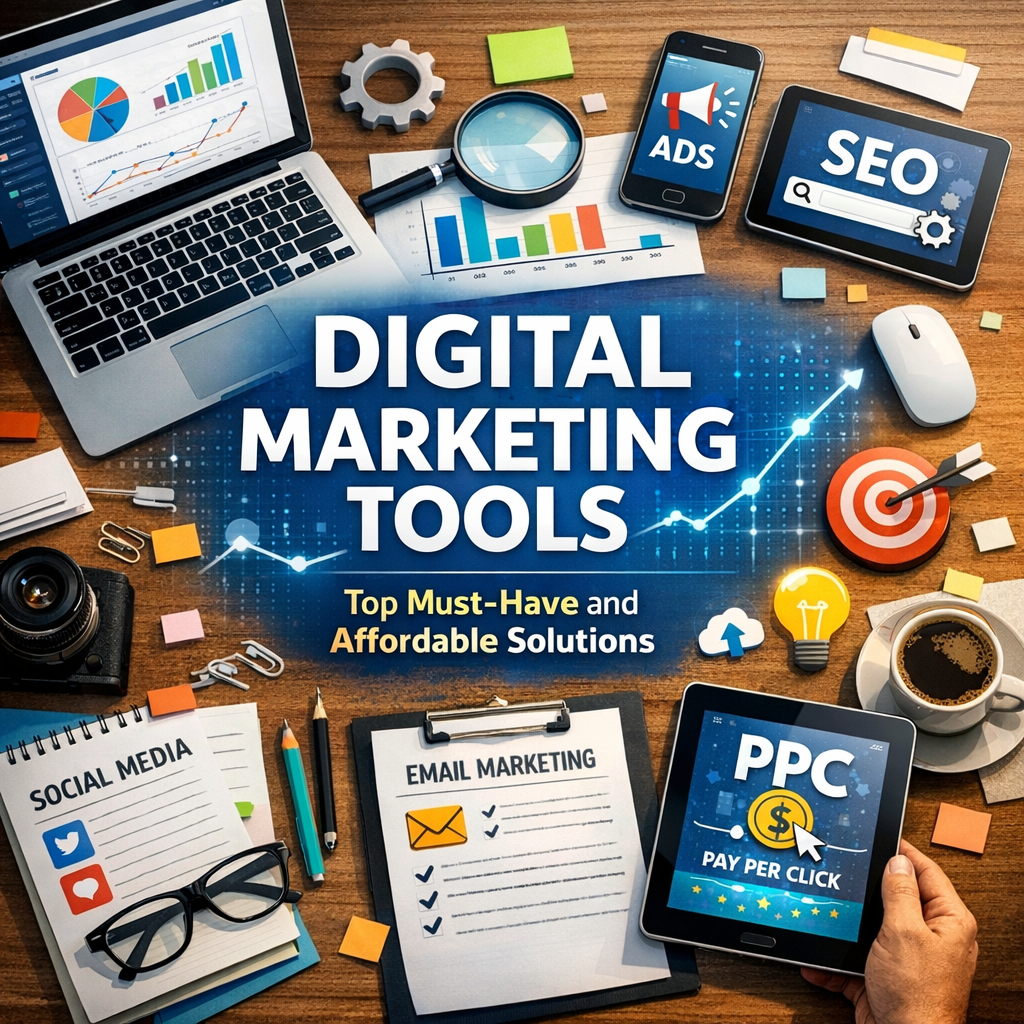
Digital marketing tools help automate tasks, analyze data, and manage campaigns across multiple channels more effectively. They simplify complex processes such as email marketing, social media management, SEO, content creation, and analytics. Investing in the right tools allows marketers to save time, reduce human error, and gain actionable insights that can improve decision-making. Moreover, many affordable tools now offer scalable features, making them perfect for growing businesses wanting to maximize their marketing potential.
Top Must-Have Digital Marketing Tools for Every Business
1. Social Media Management Tools
Managing multiple social media platforms manually can be overwhelming. Social media tools like Buffer and Hootsuite are incredibly popular as they allow you to schedule posts, monitor engagement, and generate reports from a single dashboard. Both platforms offer affordable plans suitable for startups and small teams, with intuitive interfaces that support collaboration and real-time adjustments.
2. Email Marketing Solutions
Email marketing remains one of the highest ROI digital marketing tools available. Services like Mailchimp and SendinBlue provide free tiers and cost-effective paid plans that support list segmentation, automation, and detailed campaign performance reports. These tools enable marketers to nurture leads and engage customers through personalized messaging that drives conversions.
3. SEO Optimization Tools
SEO is critical to increase organic traffic and visibility. Tools such as Ubersuggest and Moz Pro offer keyword research, site audits, and backlink tracking—all crucial components of a successful SEO strategy. Ubersuggest, for example, has an affordable pricing model and a user-friendly platform geared towards beginners, making it an excellent choice for those looking to improve their search rankings without hiring a dedicated SEO team.
4. Content Creation and Design Tools
High-quality visuals and content captivate your audience and enhance brand presence. Platforms like Canva and Crello provide easy drag-and-drop design options with thousands of templates tailored for social media posts, presentations, and advertisements. Both tools offer free versions with robust features and affordable subscriptions for accessing premium assets.
5. Analytics and Reporting Tools
Understanding campaign performance is vital. Google Analytics is an industry staple, offering comprehensive website data for free. For marketers wanting easier-to-digest insights, tools like Google Data Studio allow you to create custom reports and dashboards by integrating various data sources. These solutions help identify what’s working and where improvements are needed.
6. Customer Relationship Management (CRM)
A CRM system improves how you manage and nurture your client relationships. Affordable CRM options such as HubSpot CRM and Zoho CRM provide core functionalities like contact management, deal tracking, and automation at little to no cost for smaller teams, streamlining outreach and follow-up.
How to Choose the Right Digital Marketing Tools for Your Business
When selecting digital marketing tools, it’s important to consider your specific goals, budget, and technical expertise. Here are some tips to help you make informed decisions:
– Evaluate your needs: List the marketing activities that require automation or support. For instance, if social media is your primary channel, prioritize social media management tools.
– Consider integration: Look for tools that easily integrate with your existing software, such as email platforms or CRM, to avoid siloed data.
– Take advantage of free trials: Most providers offer demo versions or trial periods—use these to test user experience, features, and customer support.
– Focus on scalability: Choose tools that can grow with your business to avoid frequent switching and retraining teams.
– Read reviews and case studies: Learn from the experiences of similar businesses to identify pitfalls and benefits.
Conclusion
Digital marketing tools are no longer optional but integral to running successful online campaigns. With the variety of affordable options available, businesses can now leverage advanced features previously locked behind high costs. Whether you need to manage social media, optimize SEO, create compelling content, or analyze your marketing impact, there is a digital marketing tool tailored for you. By carefully selecting and utilizing these tools, you can enhance efficiency, elevate your customer engagement, and stay competitive in the evolving digital marketplace.
Start exploring these must-have tools today and watch your digital marketing efforts transform into tangible growth and success.