- Understanding the Role of Online Marketing Platforms
- Social Media Management Platforms: Simplifying Engagement
- Email Marketing Tools: Building Relationships That Convert
- Search Engine Optimization (SEO) Platforms: Enhancing Visibility
- Paid Advertising Platforms: Targeting the Right Audience
- Marketing Automation Platforms: Streamlining Workflow
- Analytics and Reporting Tools: Measuring What Matters
- Content Management Platforms: Centralizing Your Digital Presence
- Final Thoughts on Choosing Online Marketing Platforms
Online Marketing Platforms: Top Must-Have Tools for Effortless Success
In today’s digital landscape, online marketing platforms are essential for businesses seeking to build brand awareness, engage with customers, and drive sales. The vast array of tools available can seem overwhelming, but leveraging the right platforms can streamline your marketing efforts and produce impressive results with less effort. This article explores the must-have tools within online marketing platforms that enable effortless success, from social media management to analytics, and automation to content marketing.
Understanding the Role of Online Marketing Platforms
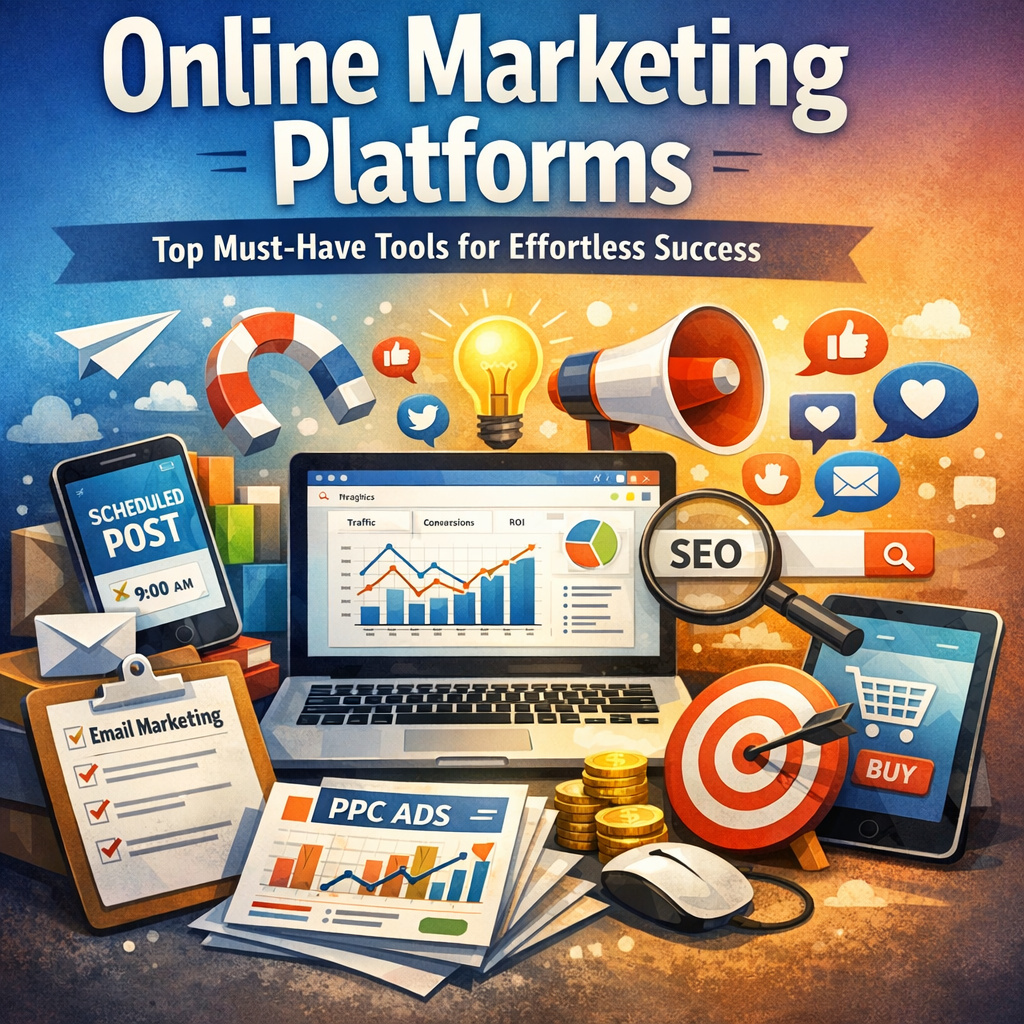
Before diving into specific tools, it’s important to understand the role online marketing platforms play in your overall strategy. These platforms provide a centralized ecosystem for creating, managing, and optimizing marketing campaigns across multiple digital channels, such as social media, email, search engines, and websites. They help businesses maintain consistency, track performance metrics, and automate repetitive tasks, allowing marketing teams to focus on strategy and creativity.
Social Media Management Platforms: Simplifying Engagement
One of the pillars of online marketing success lies in social media. Platforms like Hootsuite, Buffer, and Sprout Social offer invaluable features that help manage multiple social media accounts from a single dashboard. These tools enable users to schedule posts in advance, monitor audience engagement, and analyze the performance of different campaigns.
For example, Hootsuite’s scheduling capabilities prevent last-minute scrambles by allowing marketers to plan content weeks ahead. Detailed analytics reports provide insight into what type of content resonates most with audiences, which is essential for optimizing future campaigns.
Email Marketing Tools: Building Relationships That Convert
Email marketing remains one of the most cost-effective channels for nurturing leads and converting prospects. Platforms like Mailchimp, Constant Contact, and Sendinblue combine user-friendly email builders with advanced segmentation features. These tools allow marketers to send personalized, targeted messages based on customer behavior and preferences.
Using automated workflows to deliver welcome emails, product recommendations, or special promotions is a game-changer. It not only keeps your brand top of mind but also drives conversions without requiring a constant manual effort, making marketing more efficient.
Search Engine Optimization (SEO) Platforms: Enhancing Visibility
No matter how great your content, it won’t bring value unless it reaches your target audience. SEO tools such as Ahrefs, SEMrush, and Moz assist in optimizing websites and content to rank higher on search engines like Google. These platforms provide keyword research, backlink audits, competitor analysis, and site health monitoring.
For marketers, having access to accurate SEO data ensures that your efforts are aligned with search trends and audience intent. Integrating insights from SEO platforms into content strategy can significantly increase organic traffic, leading to sustainable growth.
Paid Advertising Platforms: Targeting the Right Audience
Paid advertising campaigns on platforms such as Google Ads and Facebook Ads Manager offer precise targeting capabilities that can dramatically improve ROI. These tools allow marketers to segment audience demographics, interests, and behaviors to reach the most relevant prospects.
Both platforms come with dashboards that show real-time performance metrics, such as click-through rates, cost per conversion, and impressions. This immediate feedback enables rapid optimization of campaigns, ensuring that every advertising dollar is spent effectively.
Marketing Automation Platforms: Streamlining Workflow
To achieve effortless marketing success, automation is key. Marketing automation platforms like HubSpot, Marketo, and ActiveCampaign integrate multiple functions such as lead management, email marketing, and social media posting into one system.
Automation saves valuable time by triggering actions based on user behavior—for example, sending a follow-up email after a purchase or scoring leads based on engagement levels. This personalized, timely communication enhances the customer experience and frees up marketers to concentrate on strategy and creativity.
Analytics and Reporting Tools: Measuring What Matters
Good marketing decisions depend on solid data. Tools like Google Analytics, Tableau, and Databox provide comprehensive reporting to measure the effectiveness of your campaigns. From tracking website traffic sources to analyzing conversion funnels, these analytics platforms help marketers identify what’s working and what requires adjustment.
Advanced reporting dashboards aggregate data from various online marketing platforms, making it easier to obtain a holistic view of your performance. This enables continuous improvement and justifies marketing investments.
Content Management Platforms: Centralizing Your Digital Presence
Content is still king, and managing it effectively across channels demands the right platform. Content management systems (CMS) like WordPress, Squarespace, and Wix offer intuitive interfaces to publish, update, and optimize website content without needing technical expertise.
Many CMS platforms integrate seamlessly with SEO and email marketing tools, allowing marketers to unify their content strategy with promotion efforts. A well-maintained website with quality content improves search rankings, builds trust, and drives engagement.
Final Thoughts on Choosing Online Marketing Platforms
Selecting the right online marketing platforms depends on your business goals, budget, and team capabilities. However, incorporating a combination of social media management, email marketing, SEO, paid advertising, automation, analytics, and content management tools will position your business for success.
By harnessing these platforms, businesses can reduce manual effort, maintain consistent messaging, and engage audiences more effectively. Ultimately, these tools empower marketers to focus on creating compelling campaigns while the platforms handle the execution, making marketing not just easier but also more impactful.
—
Whether you’re a startup or an established company, investing time in mastering these online marketing platforms is crucial. The right tools paired with a solid strategy pave the way for effortless marketing success and sustainable growth in an ever-evolving digital world.